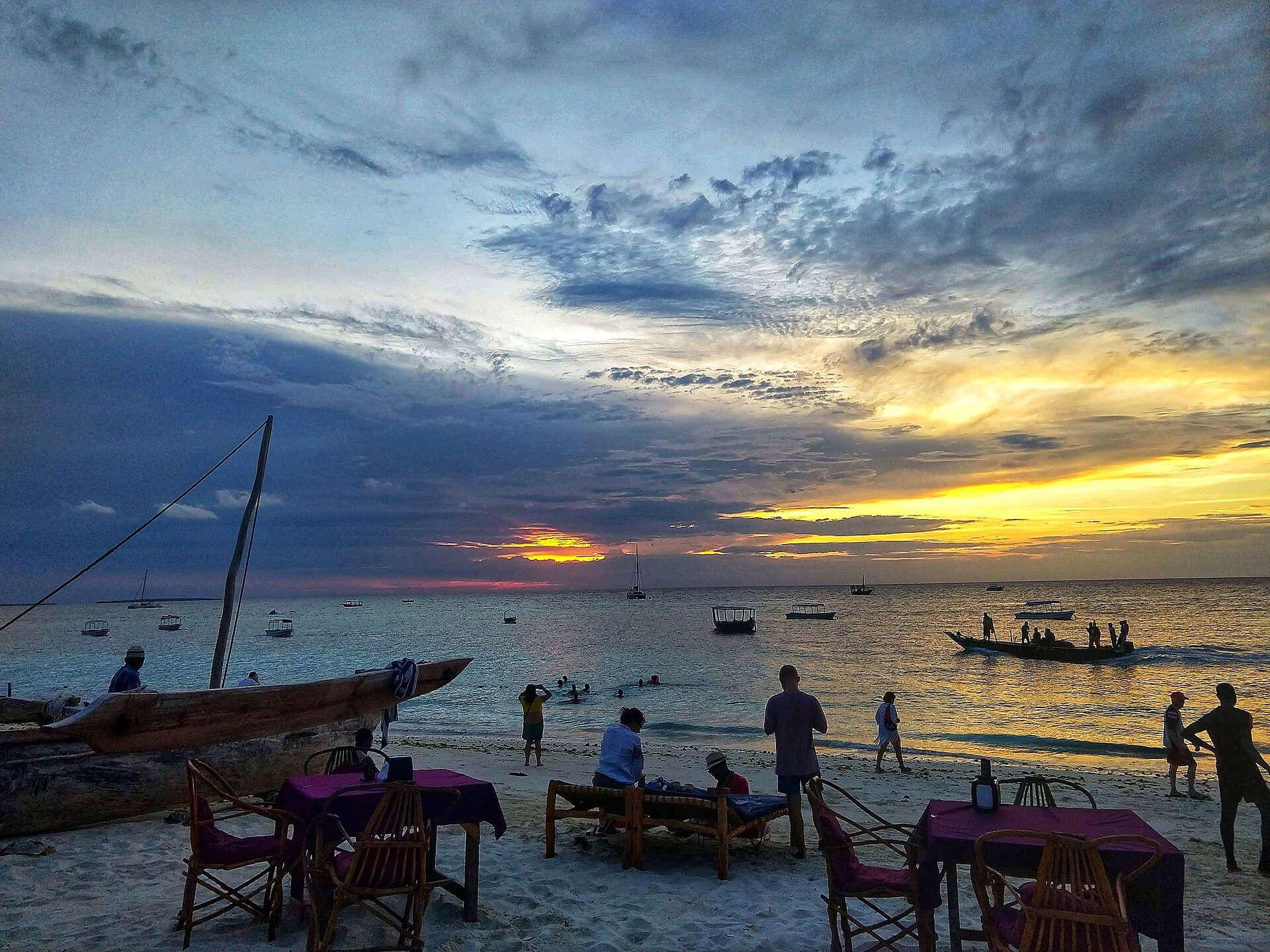
Zanzibar sits just six degrees south of the equator, so it is warm all year — typically 28–33 °C by day, with a sea of 26–29 °C. What changes is the rain and the wind. The short answer: June to October for dry, breezy and slightly cooler weather, or late December to February for hot, calm days and the clearest water. Avoid the long rains of April and May if you can.
Nungwi month by month
| Month | Weather | Crowds | Verdict |
|---|---|---|---|
| January | Hot, humid, mostly dry | High | Excellent — calm sea, great visibility |
| February | Hottest month, dry | High | Excellent; very warm |
| March | Hot, humid, rains begin late | Moderate | Good early in the month |
| April | Long rains, heavy showers | Low | Wettest month; some hotels close |
| May | Long rains easing late | Low | Wet, green, lowest prices |
| June | Dry, breezy, cooler | Rising | Very good; fresh and green |
| July | Dry, breezy, pleasant | High | Peak season — book ahead |
| August | Dry, breezy, pleasant | Very high | Peak season, especially for Italians |
| September | Dry, warm | High | Very good all round |
| October | Dry, warming up | Moderate | Excellent — our favourite month |
| November | Short rains, showers | Low | Mixed; brief afternoon showers |
| December | Hot, occasional showers early | Very high (holidays) | Great from mid-month; book early |
June to October — the dry season
The south-east trade wind (the kusi) keeps the air fresh and the humidity down, days are sunny and nights comfortable. It is the most popular time of year, peaking in July and August with European summer holidays. On the west coast the breeze can make afternoon boat crossings bumpier, so book snorkelling trips for the morning.
Late December to February — hot and calm
The north-east monsoon (the kaskazi) brings hotter, more humid weather, but also calmer seas and often the best underwater visibility of the year — excellent for Mnemba and diving. Christmas and New Year are the busiest and most expensive weeks of all; book several months ahead.
March to May — the long rains
The masika, or long rains, usually peak in April and May, with heavy tropical downpours, humid air and grey days. It does not rain all day every day, and prices drop sharply, but some boat trips are cancelled and a number of smaller hotels close for renovation. If your dates are flexible, this is the season to avoid.
November — the short rains
The vuli, or short rains, bring shorter, often afternoon showers in November and sometimes early December. Mornings are frequently bright, prices are lower before the holiday rush, and the island is green.
Tides and moon phases
- Spring tides (around full and new moon) have the biggest range: very high high-tides and very low low-tides. Beach walks between Nungwi and Kendwa are easiest then.
- Neap tides (around the quarter moons) are gentler — even Nungwi’s west beach keeps plenty of water all day.
- Sandbank trips such as Nakupenda depend on low tide; operators schedule around it.
What about Ramadan?
Zanzibar is predominantly Muslim, and during Ramadan (which moves about 11 days earlier each year; in 2027 it falls roughly in February) many local restaurants close during the day and the village is quieter. Hotels, beach bars and tours for visitors operate normally. Be discreet about eating, drinking and smoking in public in the village during daylight hours, and dress modestly.